


“I've built a great relationship with this team and truly enjoy working with them. The staff is approachable, compassionate, and genuinely invested in the people they serve. They communicate openly, follow through, and treat both clients and referral partners with respect and care. It's clear that recovery is more than a job to them—it's a mission. I trust this program and feel confident referring individuals knowing they'll be supported every step of the way!”
BlogIn-Network With Major Insurance
Ketamine vs Cannabis: Differences, Risks, and Effects
A clinical comparison of ketamine and cannabis — how they affect the brain, how they're used, and the risk profile of each. Includes what treatment looks like when both are involved.
- Answered 24/7, every call
- 100% confidential — HIPAA & 42 CFR Part 2
- Adults 18+ · dual-diagnosis welcome
Accredited, Licensed & Trusted Since 2018
- 4.8 ★★★★★
125+ verified Google reviews  The Joint CommissionGold Seal of Approval
 South CarolinaDept. of Public Health
 ConnecticutDept. of Public Health
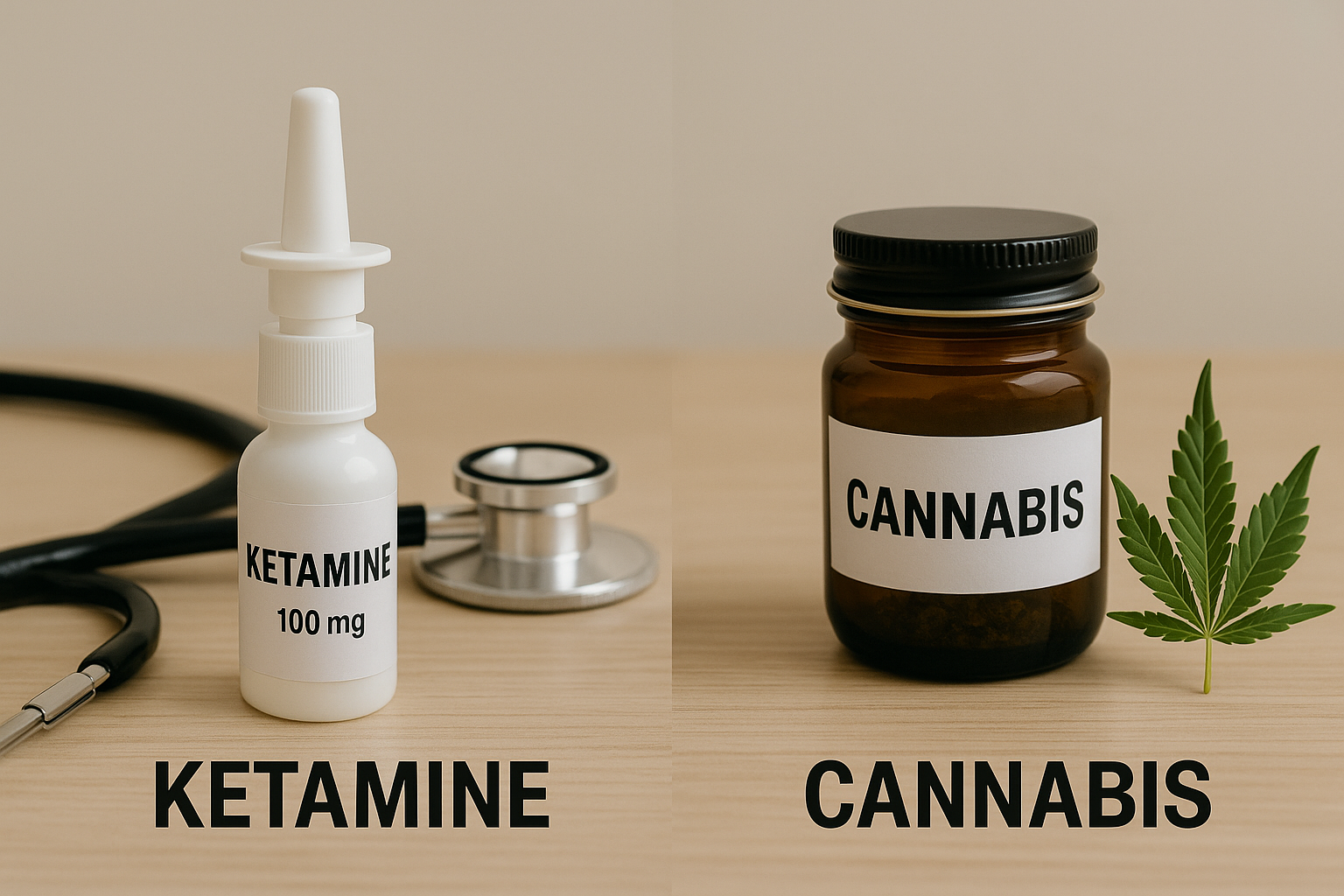
Ketamine and cannabis are two psychoactive substances with distinct medical uses and growing attention in mental health and wellness. Ketamine, a dissociative anesthetic, has gained traction as a rapid-acting treatment for depression, while cannabis, derived from the Cannabis sativa plant, is commonly used for pain relief, anxiety, and appetite stimulation. Although both can offer therapeutic benefits, combining them may carry significant risks. This article explores how ketamine and weed compare in terms of effects, safety, medical applications, addiction potential, and what happens when they’re used together.
This article will explore the differences and similarities between ketamine and cannabis, including their uses, side effects, and potential for addiction. Whether you're curious about these substances for recreational use or seeking information for medical purposes, this article aims to provide a comprehensive overview of these two drugs.
Key Takeaways
-
Ketamine offers rapid relief for depression and anxiety but has a short duration of effect, necessitating ongoing management and further research into its long-term safety.
-
Cannabis is utilized for medical purposes, yet its legality varies; understanding the components and potential interactions of cannabis with other substances is crucial for safe use.
-
Combining ketamine and cannabis can lead to serious cognitive impairments, increased risk of addiction, and dangerous side effects, warranting professional consultation before use.
What is the difference between ketamine and weed?
The main difference between ketamine and weed is their chemical composition and how they act in the brain. Ketamine is a synthetic dissociative anesthetic that blocks NMDA receptors, affecting glutamate signaling. Weed, or cannabis, is a plant containing THC and CBD, which act on cannabinoid receptors and influence mood, appetite, and perception. Ketamine has a rapid onset (5–15 minutes by IV) and short duration (30–60 minutes), mainly used in clinical settings. Weed’s effects vary by method, smoking acts in minutes, edibles take longer, and can last up to 8 hours, depending on dose and tolerance. Let's discuss the main differences between ketamine and weed in greater detail:
1. Chemical composition and how they work in the body
Ketamine is a synthetic dissociative anesthetic that primarily blocks NMDA receptors in the brain, altering glutamate signaling. This mechanism produces both pain-relieving and fast-acting antidepressant effects, which is why ketamine is used in both surgical and psychiatric settings.
Cannabis, on the other hand, is a plant containing over 540 compounds, including THC and CBD. THC activates the body’s endocannabinoid system by binding to CB1 receptors in the brain, creating psychoactive effects like euphoria and altered perception. CBD does not produce a “high” but may help reduce anxiety and inflammation.
2. Method of administration and onset time
Ketamine is most often administered intravenously in medical settings, producing effects within 5 to 15 minutes. It can also be taken intranasally or intramuscularly, depending on the treatment purpose. Due to its potency, healthcare professionals usually monitor its use.
Cannabis is typically consumed through smoking, vaping, or edibles. Inhaled forms act within minutes, while edibles may take 30 minutes to two hours to kick in. Cannabis use is generally more flexible and user-controlled, though dosing can be less predictable with edibles.
3. Duration and intensity of effects
Ketamine’s acute effects last around 30 minutes to an hour, but its antidepressant benefits may persist for several days. Its effects are more intense and dissociative, which is why it's used under clinical supervision.
Cannabis effects vary based on the form and THC content. Smoked cannabis lasts 1 to 3 hours; edibles can last up to 8 hours. The intensity is usually milder than ketamine's, but high doses can still cause anxiety, confusion, or paranoia.
Ready to take the first step?
Speak with our admissions team 24/7 — free, confidential, and no obligation.
What are the Medical Uses of Ketamine vs. Weed?
Ketamine and cannabis both offer therapeutic benefits, but their medical applications, regulatory status, and mechanisms of action differ significantly.
Ketamine was originally developed as an anesthetic and continues to be widely used in surgical and emergency medicine for its rapid-acting pain-relieving and sedative properties. In recent years, its use has expanded into psychiatry, where it has shown remarkable promise in treating major depressive disorder, treatment-resistant depression, suicidal ideation, PTSD, and certain types of chronic pain. The FDA-approved form of esketamine, delivered as a nasal spray (Spravato), provides rapid relief for individuals who have not responded to traditional antidepressants.
Cannabis, on the other hand, has a broader history of use in symptom management across multiple medical conditions. The primary active compounds, THC and CBD, interact with the endocannabinoid system to regulate pain, appetite, mood, and inflammation. Cannabis has proven effective in managing chemotherapy-induced nausea, appetite loss in HIV/AIDS, and muscle spasticity in multiple sclerosis.
Both substances carry misuse potential, with ketamine presenting higher psychological addiction risks when used outside medical supervision. Combining the two is an area of clinical interest, though research is limited and risks remain unclear.
How do ketamine and weed affect mental health?
Ketamine and cannabis each impact mental health differently. Ketamine is used in psychiatry to treat major depression, treatment-resistant depression, and suicidal ideation. Its rapid effects, felt within hours, help during acute psychological crises. Ketamine enhances glutamate signaling, promotes synaptic plasticity, and supports the growth of new neural connections. However, frequent or unsupervised use may cause cognitive impairment, mood swings, or worsen depression.
Cannabis has mixed mental health effects. CBD-rich strains can reduce anxiety and improve sleep, while THC-rich strains may trigger anxiety, paranoia, or psychosis, especially in vulnerable individuals. Long-term or adolescent cannabis use may increase the risk of depression and cognitive decline.
Combining ketamine and cannabis may intensify sedation, confusion, and emotional instability. Their neurochemical effects can interact unpredictably, heightening dissociation and panic. Both substances can alter motivation and reward pathways, raising dependency risk. Clinical use of both together should be closely supervised.
Verify your insurance in minutes
We’re in-network with major commercial plans. Find out what your coverage includes.
Getting expert support for substance-related mental health struggles
If you or someone you love is struggling with depression, anxiety, or substance use tied to ketamine or cannabis, professional support is essential. At Lantana Recovery, clients receive compassionate, evidence-based care tailored to dual-diagnosis challenges. Whether you're managing treatment-resistant depression or navigating co-occurring substance use, our clinical team helps create a personalized recovery path grounded in both emotional healing and long-term stability.
Can ketamine and weed be used together?
Using ketamine and cannabis together affects the brain in unpredictable ways. Though they target different neurotransmitter systems, ketamine on glutamate/NMDA receptors and cannabis on the endocannabinoid system, their combined impact can cause excessive sedation, cognitive impairment, and emotional instability. One key risk is intensified nervous system depression, including slowed reaction time, confusion, paranoia, or even psychosis. Chronic co-use may lead to memory issues, cognitive decline, and psychological dependence.
Medical professionals strongly discourage the unsupervised use of both substances together. Ketamine is typically administered in clinical settings, and cannabis can interfere with its evaluation and effects. Doctors may advise reducing cannabis before starting ketamine treatment. Research on co-use is limited. Some theories suggest CBD might reduce post-ketamine anxiety, but THC may worsen dissociation. Until more studies are completed, combining ketamine and cannabis should only happen under clinical supervision.
Ready to take the first step?
Speak with our admissions team 24/7 — free, confidential, and no obligation.
What are the risks of mixing ketamine and weed?
Mixing ketamine and weed increases the risks of memory loss, confusion, poor coordination, and long-term cognitive decline. It also heightens the chances of accidents, legal trouble, and respiratory issues. Psychologically, the mix can worsen anxiety, paranoia, and dissociation, especially with high-THC cannabis. Frequent co-use raises dependency risk and may deepen mental health problems. Let's discuss the major risks of mixing these two:
1. Cognitive and neurological risks
One of the most immediate concerns when mixing ketamine and weed is severe cognitive impairment. Individuals may experience short-term memory loss, confusion, poor concentration, and slowed reaction times. These effects are especially problematic in situations that demand alertness, such as working, driving, or making important decisions. The combination may lead to disorientation and dissociation, making it difficult for individuals to interpret their surroundings or control their behavior.
Longer-term risks may include diminished executive function, persistent attention deficits, and impaired learning and recall, particularly if the combination is used frequently or in high doses. These effects can impact both daily functioning and mental well-being over time.
2. Physical and behavioral risks
The mix of ketamine and cannabis can also result in profound sedation, dizziness, and motor coordination issues, which increase the risk of falls, injuries, and accidents. Driving or operating machinery while under the influence of both substances significantly increases the likelihood of legal and physical consequences, including DUIs, traffic collisions, or workplace accidents.
Moreover, the combined use may lead to irregular heart rate, increased blood pressure, or respiratory depression, especially in sensitive individuals or those with pre-existing medical conditions. These physiological effects should not be underestimated, particularly when high-THC cannabis products are involved.
3. Psychological and emotional risks
From a psychological standpoint, combining ketamine and cannabis can exacerbate anxiety, paranoia, panic attacks, and mood swings. Individuals with a history of mental health disorders, such as depression, bipolar disorder, or psychosis, may be especially vulnerable to experiencing worsened symptoms or psychiatric destabilization.
High-THC cannabis may amplify ketamine’s dissociative effects, leading to panic, depersonalization, or even psychotic-like episodes, particularly in those already prone to emotional instability. These reactions can be frightening, difficult to manage, and may result in the need for emergency care or psychiatric intervention.
4. Addiction and dependency potential
Repeated or recreational co-use of ketamine and cannabis may increase the risk of psychological dependence on both substances. Ketamine already carries a well-documented risk of addictive patterns, especially in users seeking frequent dissociative or euphoric experiences. Cannabis, although often perceived as safer, can also lead to cannabis use disorder, particularly when used daily or in adolescence.
Together, the substances may create a reinforcing cycle, where users increasingly rely on them for emotional regulation, stress relief, or escape from mental distress. This pattern not only increases dependency risk but may also worsen the underlying issues they were intended to treat, such as depression or anxiety.
Which has a higher risk of addiction: ketamine or weed?
Ketamine has a higher risk of addiction than weed due to its rapid onset, intense dissociative effects, and quick tolerance buildup. Users may escalate dosing to chase the same effect, increasing the risk of psychological dependence and withdrawal symptoms like anxiety, depression, and cognitive decline. Cannabis dependence tends to develop gradually and is often linked to long-term, high-THC use, especially when started in adolescence.
While cannabis withdrawal symptoms are typically mild, such as irritability, insomnia, and reduced appetite, ketamine can produce more severe psychological disruptions, including compulsive use and emotional instability. Chronic co-use of both substances can worsen memory, motivation, and emotional regulation, making recovery more difficult and increasing the risk of long-term harm. Recovery from either substance takes time, support, and commitment, but progress is possible and worth celebrating. Learn what you can expect when you're 11 months sober and how to stay motivated along the way.
What are the legal differences between ketamine and weed?
The main legal difference between ketamine and weed is that ketamine is federally legal for medical use as a Schedule III drug, while cannabis remains federally illegal as a Schedule I substance. Ketamine can be prescribed nationwide under medical supervision. Cannabis legality varies by state, with many allowing medical or recreational use despite federal restrictions. Misuse of ketamine without a prescription can lead to federal charges, while cannabis offenses depend on state laws, ranging from full legality to criminal penalties for possession or distribution. Federal law still prohibits cannabis, especially on federal property or across state lines.
In contrast, ketamine treatment is typically administered in licensed clinics under strict DEA oversight, with required documentation, security protocols, and clinician monitoring, conditions not required for cannabis use in legal states.
Verify your insurance in minutes
We’re in-network with major commercial plans. Find out what your coverage includes.
How is addiction to ketamine or weed treated?
Addiction to ketamine or weed is treated through psychotherapy, behavioral therapy, and structured rehabilitation programs. Cognitive-behavioral therapy (CBT), motivational interviewing, and dual-diagnosis care help address both substance use and underlying mental health issues. Ketamine-assisted therapy is also being explored as a potential treatment tool for other addictions. Treatment success improves with personalized care, long-term support, and access to recovery resources like group therapy and aftercare planning. Seeking professional treatment early can improve outcomes, even for individuals facing legal or personal barriers. If you're unsure about your options, it’s worth exploring whether you can go to rehab with pending charges to understand your rights and access to care.
1. Standard addiction treatment options
Addiction to ketamine or cannabis is commonly treated using psychotherapy, behavioral therapy, and structured rehab programs. CBT helps patients manage cravings and triggers, while motivational interviewing builds internal motivation to quit. Residential programs support those with severe addiction or co-occurring conditions through detox, stabilization, and relapse prevention. Although no FDA-approved medications exist for cannabis addiction, short-term medications may ease withdrawal symptoms like anxiety or insomnia.
2. Role of ketamine therapy in treating addiction
Ketamine-assisted psychotherapy (KAP) shows promise in treating addiction by promoting neuroplasticity and disrupting compulsive patterns. Delivered at sub-anesthetic doses in medical settings, ketamine may reduce cravings and provide emotional breakthroughs. While not a standalone solution, ketamine can enhance the impact of therapy and support long-term behavior change in those unresponsive to traditional treatments.
3. Support resources for dual-substance recovery
Recovery from co-use of ketamine and cannabis requires dual-diagnosis treatment that combines addiction and mental health care. Programs include integrated behavioral health services, group therapy like NA or SMART Recovery, and relapse prevention planning. Family therapy and aftercare support, including sober housing and telehealth, help maintain progress. Personalized, trauma-informed treatment is key to lasting recovery.
Why choose Lantana Recovery for integrated addiction treatment
Treating ketamine or cannabis addiction, especially when combined with mental health conditions, requires a treatment center equipped for complexity. Lantana Recovery offers integrated programs designed for individuals managing dual-substance use, trauma, or relapse risks. From CBT and group therapy to aftercare planning, Lantana provides the structure and support needed to break the cycle and build lasting recovery.
Bottom line: Ketamine vs. Weed
Ketamine and cannabis each offer unique benefits and risks, particularly when used for medical purposes. While ketamine provides rapid relief for severe depression and anxiety, its effects are often short-lived and require ongoing management. Cannabis can manage symptoms like nausea and appetite loss, but it carries its own set of risks, particularly when mixed with ketamine.
Understanding the interactions, addiction potential, and legal considerations of these substances is crucial for anyone considering their use. By making informed decisions and seeking professional guidance, individuals can navigate the complexities of using ketamine and cannabis safely and effectively.
FAQs about Ketamine vs. Weed
What makes ketamine’s mechanism of action different from cannabis?
Ketamine’s mechanism of action differs from cannabis because it targets the glutamate system via NMDA receptor antagonism, while cannabis primarily acts on the endocannabinoid system. This leads to faster dissociative and antidepressant effects with ketamine, unlike the gradual psychoactive or calming effects of cannabis.
Can cannabis reduce the side effects of ketamine treatment?
Cannabis may reduce some side effects of ketamine treatment, particularly anxiety or nausea, but the interaction is poorly studied and can also increase sedation or paranoia. Any combination should only be considered under clinical supervision.
Are there specific mental health conditions where ketamine is preferred over weed?
Yes, ketamine is often preferred over weed for acute suicidal ideation or treatment-resistant depression because of its rapid action and medical supervision. Cannabis may worsen symptoms in high-risk psychiatric conditions.
Why is combining cannabis and ketamine riskier for adolescents?
Combining cannabis and ketamine is riskier for adolescents because both substances can disrupt brain development, impair cognition, and increase long-term psychiatric risk. Early exposure may also raise the chance of addiction.
Does long-term use of either drug impact emotional processing?
Yes, long-term use of either ketamine or weed can blunt emotional processing, but ketamine’s dissociative effects may accelerate emotional detachment, while cannabis can dull affective responsiveness over time, particularly with chronic use.
How can Lantana Recovery help if someone is using ketamine and cannabis together?
Lantana Recovery helps individuals using ketamine and cannabis together by offering integrated, dual-diagnosis treatment that addresses both mental health and substance use. Their evidence-based programs are designed for long-term recovery, with medical and therapeutic support tailored to complex cases.
In-Network With Major Insurance Providers













Not sure if you're covered? Verify your benefits in minutes — free & confidential.
Admissions
The Admissions Process
Starting treatment at Lantana Recovery is simple. Here's exactly what happens from your first call.
Call or Reach Out
Speak with a caring admissions specialist 24/7 — no pressure, completely confidential.
Verify Your Insurance
We confirm your in-network benefits for PHP, IOP, or outpatient detox — usually the same day.
Phone Assessment
A 10–15 minute ASAM-based assessment helps us understand your history and recommend the right level of care.
Clinical Review & Intake
Our team reviews your assessment, builds an individualized plan, and schedules your start date.
Client Stories
What clients say about Lantana
4.8★★★★★
125+ verified Google reviews
125+ verified Google reviews
“I spent a total of 11 weeks in Lantana programs — 6 weeks of PHP and 5 weeks in IOP. I am truly grateful for my experience with the staff and clients there. Although they are a newer program, they take client feedback to heart and are willing to work with you on your recovery and mental health goals. They changed my life.”
“This place is absolutely amazing, from the doctor to the therapists to the staff! They really care and they understand because most of them have been in our shoes. The women I was surrounded by were so uplifting — I was truly blessed to have gotten the help that I did from Lantana. They show you what it feels like to have sober fun! The people I met at Lantana will always have a special place in my heart.”
“I was referred to Lantana for aftercare and I'm so grateful I did it! The staff is so amazing and supportive. They listened to client feedback and made program enhancements. Ralph, Yana, Bill & Christian are so down to earth and easy to talk to! I will stay connected and look forward to alumni events!”
“This is my first experience with a recovery center. The entire staff was very true to me my entire stay. Jen delivered very powerful messages when she directed class. Scott totally gets me and is very easy to talk to. Ashley is a powerful ball of energy and wonderful at what she does. William truly related to me and to what my needs were. I was blown away by the professionalism and structure that Lantana offered. Lantana has given me the tools and confidence that I need for a successful recovery!”
“I have a strong connection to Lantana Recovery in New Milford, CT. I have been able to stay sober for many years through this connection. The culture here supports a strong 12-step fellowship presence through sponsorship and step work for those who desire it. The staff here is amazing — supportive and helpful. They can even help with getting clients connected to the local recovery community. The location is perfect too, tucked into a quintessential New England downtown.”
“My only regret about this place is that I didn't come here sooner! I recently completed the PHP program here. I immediately felt a positive and welcoming energy walking through the doors. My recovery manager was on the ball and I immediately felt I could trust him. My therapist was amazing and I got a lot out of our one-on-ones and group sessions. The classes were very informative and helped me shape an entirely different perspective on life. I left there a different person. Thank y'all so much for helping me get my life back, my family back, and a strong foundation to build on.”
“My husband had been in and out of different facilities for a six-month period. Once he was moved to Lantana there was significant improvement almost immediately, and my husband was able to move through the program and succeed. Thank you to the team at Lantana for understanding his issues and working toward a recovery and a plan for him to move forward.”
“I arrived at Lantana a broken, miserable, lost soul. I left Lantana six weeks later with the knowledge and acceptance that I was an alcoholic. Lantana both saved my life and gave me life. I stayed at the mother's house for three months and attended IOP sessions three times weekly, which helped me grow in the understanding of my disease and how to cope. Almost 7 months after discharge, I stay in touch with these beautiful souls. I am 69 and have such faith, joy, and curiosity in the life I have left to live.”
“This program and staff saved my son's life. They are kind and compassionate and treated us with respect. Addiction is a powerful disease and cannot be battled alone — it takes an army, and Lantana has built a great force to help families with that battle. We could not be more grateful for Mark, Mike, Christian and the entire team.”
“Lantana provides amazing opportunities for people to succeed. The staff and therapists are extremely knowledgeable and helpful. I had a great experience.”
“Lantana has consistently helped clients of mine that have gone through their programs. The clinical staff is top notch and their support staff are equally impressive at providing excellent care to clients. After 15 years of working in the treatment field I am still very confident when I refer families to Lantana for help with their loved ones.”
“Before I went to Lantana I was living an absolute mess of a life. This establishment has given me the tools to a better way of living! Everyone's experience is different — they teach you to take accountability for yourself. You get out what you put in, and they REALLY care and support you. Loving and caring staff that has your back. Reach out and get help if you need it!”
“The program at Lantana is wonderful. I went to Lantana directly after leaving a 30-day inpatient program and this was the best decision. The program helped me learn many coping skills for my recovery. The entire staff is amazing — they even helped with aftercare once I completed the program. I can't say enough about how wonderful this experience was.”
“Lantana saved my life. I've been to multiple rehabs and Lantana stands out. Such a great staff. They helped me build a foundation and I'm now over 2 years sober. They teach you how to live life and have fun again, without substances.”
“Lantana Recovery is amazing! I can't say enough great things about this treatment center. They genuinely care and have a team that truly puts recovery first. The staff is compassionate and knowledgeable, creating a safe and supportive environment for healing. They don't just treat the addiction — they care for the whole person, offering tools and guidance that really make a difference. I highly recommend this center to anyone seeking real, lasting recovery!”
Lantana Recovery Has Been Featured In





Chat with us.
We're here to help you or your loved one on their path to sobriety — free, confidential, and available 24/7.

Structure, support, and a team that knows your name — starting this week.
Five minutes. One real person on the other end — day or night. No pressure, no obligation, just honest answers about what comes next.
Answered 24/7 · ★ 4.8 on Google (125+ reviews) · Free & confidential · HIPAA & 42 CFR Part 2 protected